Categories
Top Luxury Brands' Financial Dominance Revealed
The Titans of Taste: Unveiling the World's Top-Earning Luxury Brands
Aug 8th,2025
430 Views
In the rarefied air of high-end commerce, a select group of luxury brands continue to defy economic gravity, weaving desire into staggering revenue. As the first half of 2025 unfolds against a backdrop of geopolitical tension and currency fluctuations, the financial performance of these houses reveals not just consumer preferences, but a masterclass in brand alchemy.
The Revenue Royalty
At the zenith sits Hermès, whose H1 2025 revenue soared to €80.3 billion—an 8% year-on-year increase at fixed exchange rates. The French maison’s legendary craftsmanship and scarcity model fueled this growth, with its iconic leather goods division surging 12.4% to €35.78 billion alone. Remarkably, Hermès maintained an industry-defying 41.4% operating margin, cementing its status as the profitability benchmark .
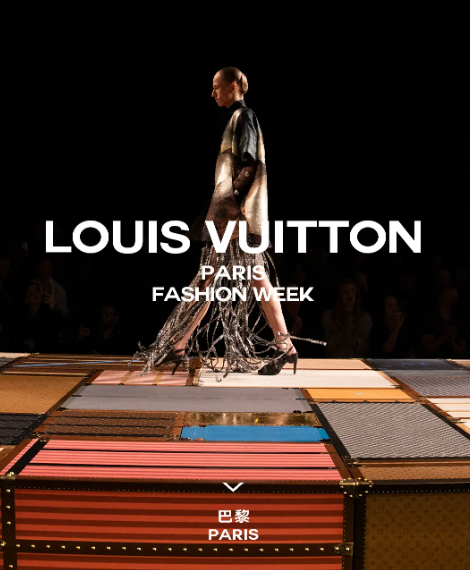
Hot on its heels, LVMH Moët Hennessy Louis Vuitton posted H1 revenues of €39.8 billion. While slightly trailing Hermès in recent growth, LVMH’s empire is anchored by Louis Vuitton, which astonishingly generates 55% of group revenue—equivalent to four times Dior’s contribution. This dominance underscores LV’s unparalleled position as luxury’s commercial engine .
Global Luxury Revenue Leaders (H1 2025):
| Brand/Group |
Revenue (€) |
Growth (YoY) |
Profit Margin |
| Hermès |
80.3B |
8% |
41.4% |
| LVMH Group |
39.8B |
Stable |
22.6% |
| Prada Group |
27.4B |
7.5% |
22.6% |
Regional Power Dynamics
The luxury map is being redrawn, with Japan emerging as 2025’s star performer. Hermès reported a blistering 16% growth there, fueled by hyper-loyal local clients and curated retail expansions. Meanwhile, the Middle East dazzled with a 17.2% Hermès sales surge, while Americas grew steadily at 11.7% .
Contrast this with Asia’s cooling trend: Mainland China-led markets (ex-Japan) grew just 3% for Hermès, a significant slowdown from prior years. Brands responded with immersive local activations—Hermès hosted craft exhibitions in Shenzhen, while Bulgari mounted Serpenti art shows in Shanghai—to reignite demand .
Category Conquests
Leather goods remain luxury's golden goose. Hermès' leather division drove nearly 45% of total revenue, while LVMH's handbag hegemony continues. Yet diversification is accelerating:
- Jewelry & Watches: While Hermès watches dipped 7.9%, LVMH’s stable (Tiffany, Bulgari, Chaumet) delivered resilience through innovations like Tiffany’s global store redesign .
- Fashion’s polar stars: Prada Group saw Miu Miu rocket 49.2%, while the flagship Prada brand slightly declined—highlighting how younger labels capture zeitgeist .
- Experiential luxury: Hermès leveraged equestrian events and Shanghai fashion shows to transcend mere product selling.
Brand Value vs. Revenue Power
Revenue tells only half the story. Brand Finance’s 2025 valuation reveals fascinating disconnects:
- Porsche leads brand value at $411.45B despite revenue gaps, proving automotive luxury’s cachet
- Chanel ($379.13B value) and Rolex ($187.72B) outvalue larger conglomerates in cultural capital
- Hermès ($199.12B value) uniquely bridges both worlds—high revenue and mythic prestige
Strategic Divergence
The titans are pursuing distinct playbooks:
Hermès doubles on artisanal control—opening new French leather workshops and freezing 2025 price hikes after last year’s increases. Its 6-7% annual production growth sustains scarcity allure .
LVMH leverages portfolio power. With Louis Vuitton funding experiments like Loewe's artistic ventures and Tiffany's retail innovations, it builds an ecosystem where brands cross-pollinate audiences .
Prada Group bets on acquisition-fueled scale, spending €12.5B to absorb Versace—a move poised to reshape the accessible luxury segment.
The Road Ahead
As economic clouds gather, these brands face critical tests:
- Can Hermès maintain 40%+ margins while investing heavily in French production?
- Will LVMH’s dependence on Louis Vuitton become a vulnerability amid slowing European tourism?
- How will Prada integrate Versace while reigniting its namesake brand?
What remains certain is luxury's enduring power to convert heritage and desire into financial performance. As Hermès CEO Axel Dumas declared, the "strength of the Hermès model" lies not in chasing trends, but in mastering timeless arts—a philosophy echoing across the industry's elite.
For investors and aficionados alike, these brands represent more than financial instruments: they are case studies in building empires where beauty and business become inseparable.